Carrier Bags
Just as computational practices and technologies can take many (material and discursive) forms, so can carrier bags depending on their context of use, materiality, and carrier.
This is a collection of brief object-stories (or story-objects). In the tradition of Haraway’s material-semiotic storytelling [99, 100] and in solidarity with Black feminist [73, 101, 102] and Indigenous [103, 104] thinkers who resist white eurocentric view of knowledge and technology as neutral, de-storied and disembodied, we offer more and less vernacular carrier bags and explore their teachings. Such carrier-bag-objects draw attention to histories of computing that are worldly, material, and multiple.
What objects emerge as carrier bags in our environments?
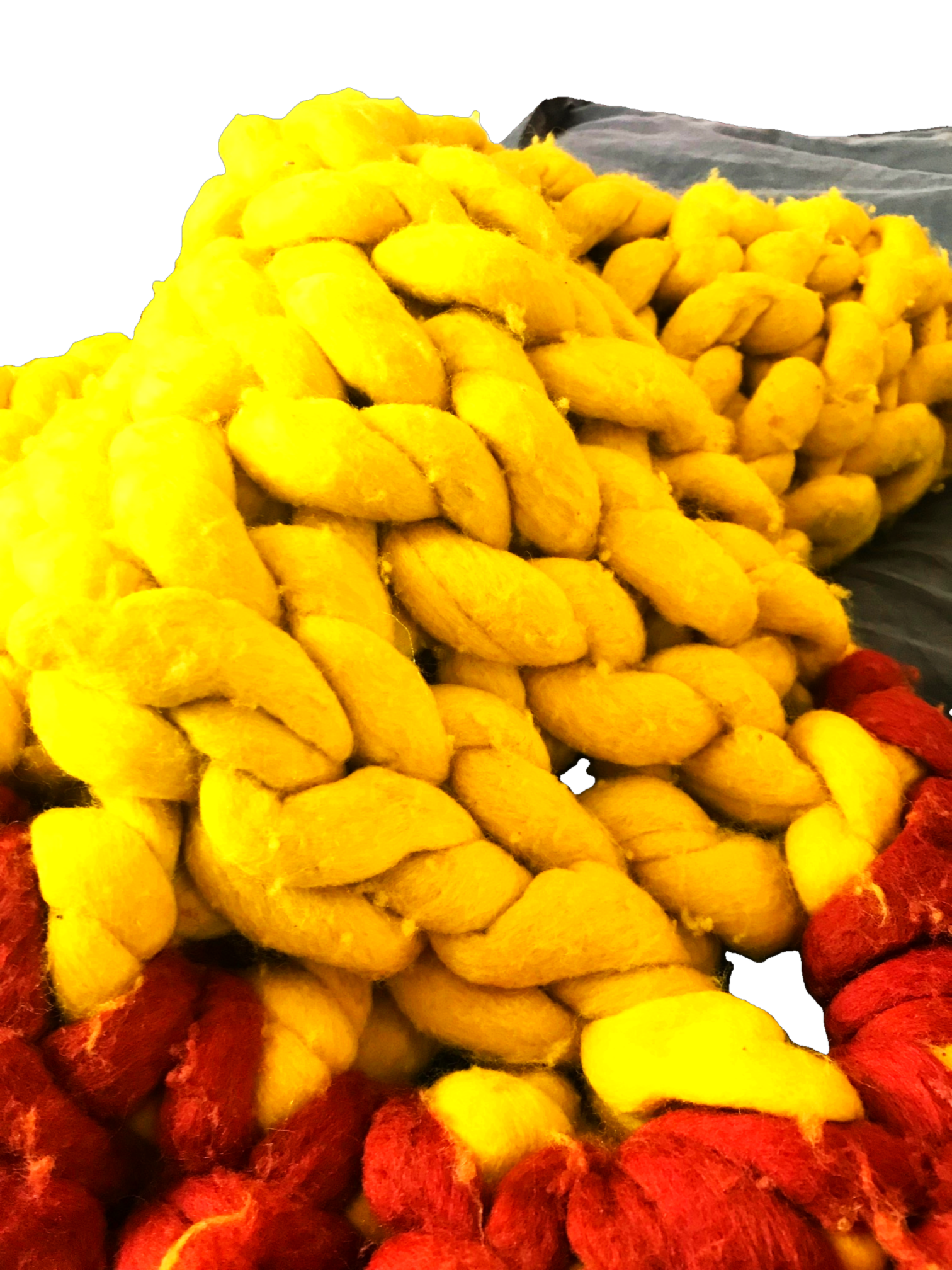
A wool blanket in a large knit pattern, yellow with a red fringe, knitted with arms instead of needles for a loved one. It holds memories, envelops one in warmth, wears down with time, becoming increasingly knotted. It carries the sign of the animal's body, its musky scent still present in the wool, and all the complexities that come with that, including animal-human relations of exploitation and appropriation as well as geopolitics of labor distribution and trade relations. It carries love and comfort. It holds stories of crafts and entangles them with computational history of cryptography, as crafts have often been used to pass encoded messages (such as underground railroad quilts that provided guidance from those running from slavery in the US). It points to the ritualised, recursive nature of algorithms (see [105] on emergence of algorithms from rituals) and draws attention to how every-day objects and practices partake in a more modest lineage of computing technologies.
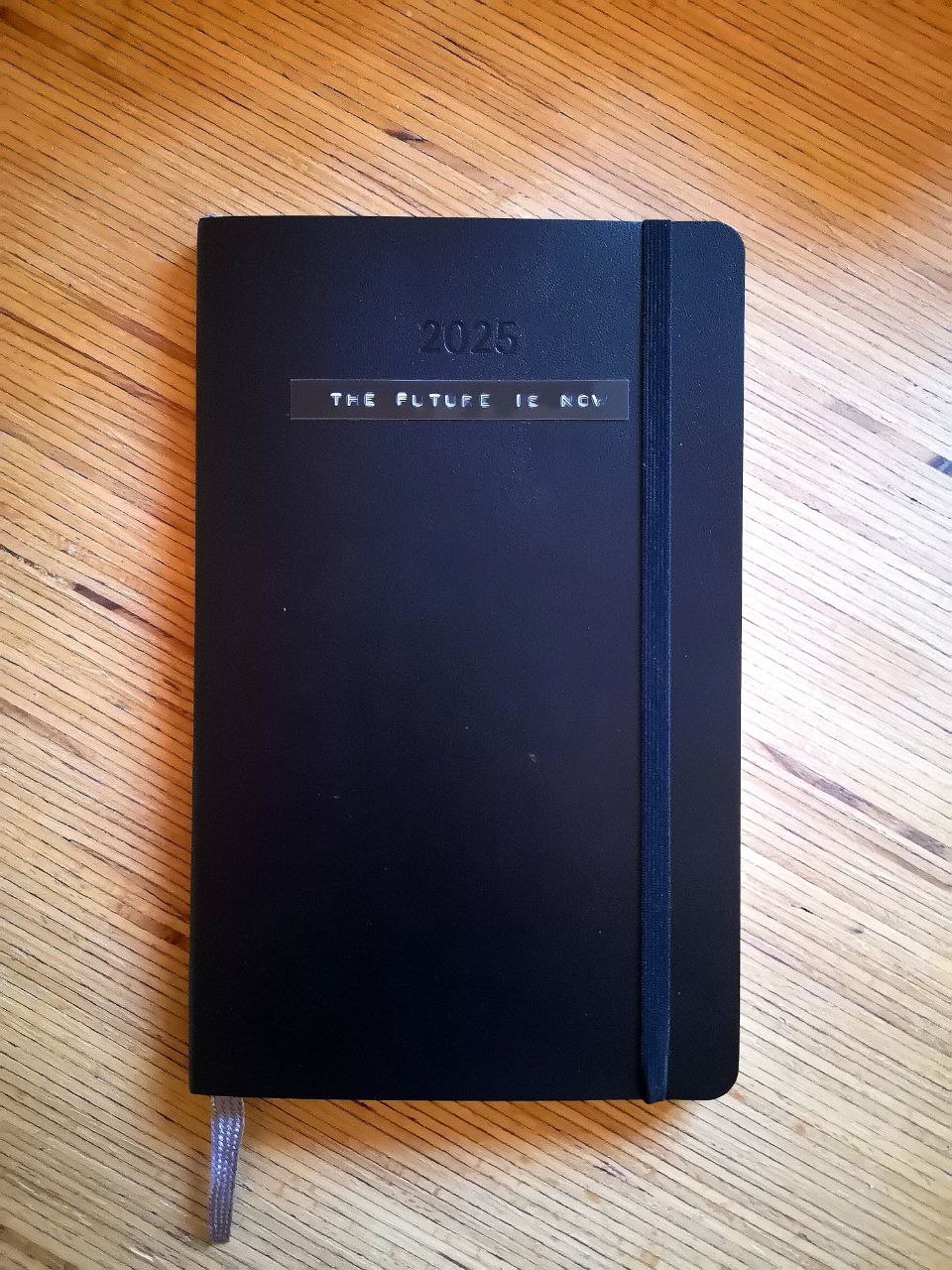
During our research group discussions, the image of a carrier bag manifested itself for me as an object of ambiguity that is both an object of care and an object of constraint.
My analogue calendar came to mind as a suitable metaphor for this: It is an invitation for filling it with life stories within the format of one-week-per-page, days seperated in respective boxes.
This given format presets the way in which content is added. However, due to its analogue nature, lines can be crossed and the way you fill it in can be individualised within its materialistic and beyond format-dependent constraints. I also did some personalisation putting a ‘motto’ of the year on the calendar’s cover.
On one of the first pages you can write down your address and an amount of money you would give to the person that will find it. I found it hard to define an adequate finder’s fee - especially because I wrote it down when I began using the calendar. Since the calendar becomes a carrier of private and personal stories, I suppose the caring about and for it is increasing the more I interact with it (for academic references in relation to this phenomena occurring in the field of data-driven services: [174, 175, 177])
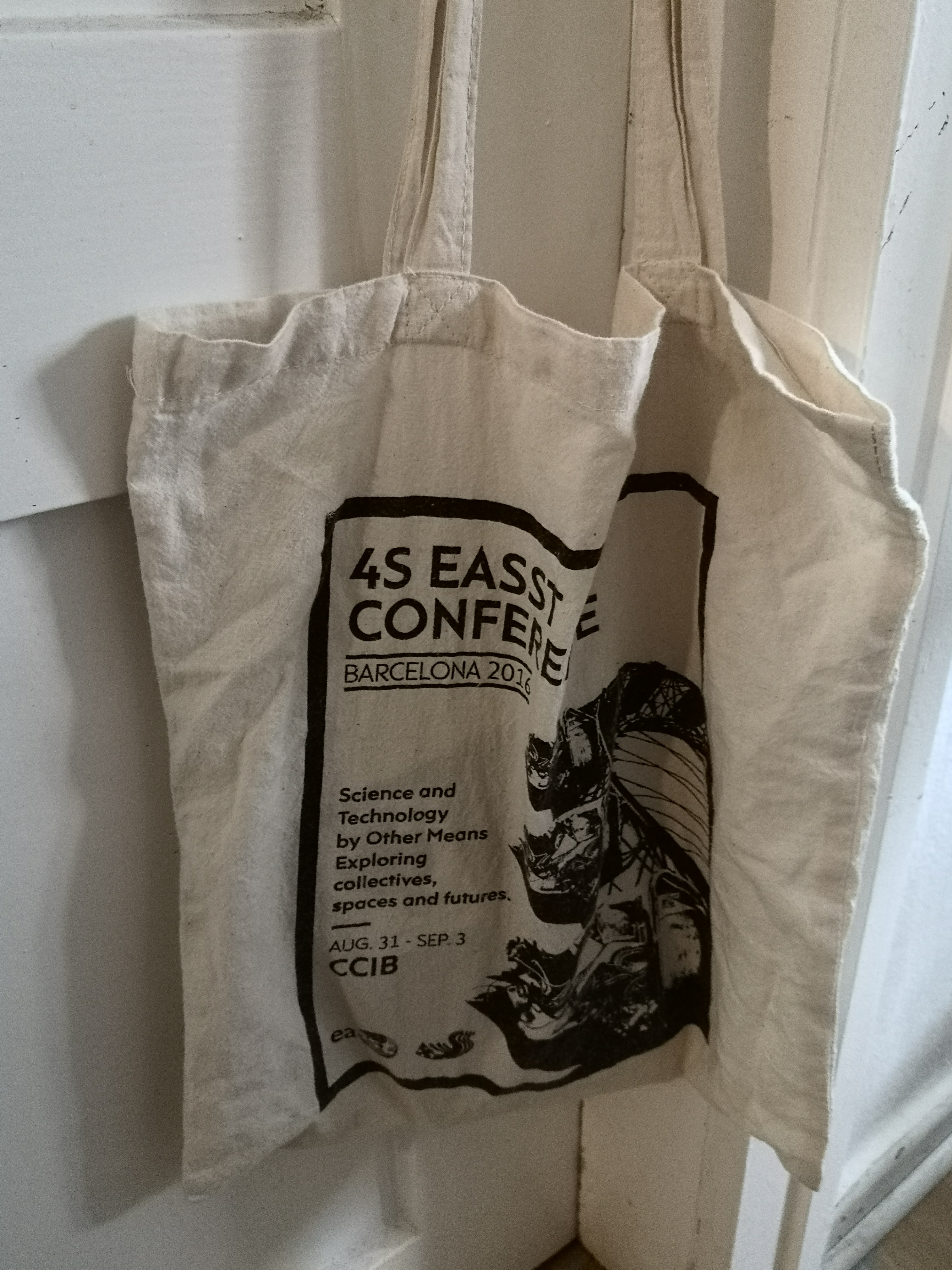
Conference bags are literally bags, of course. Furthermore, they can be seen as a symbol of belonging to a scientific community; they are markers of professional identity. Usually, they contain items from the location of the conference, maps, leaflets, vouchers, additional info material etc. They can serve as a means of interaction and serve as ice-breakers to talk to others commenting on the bag and content. Conference bags reflect the shifting of differences in disciplinary cultures in the way they are designed - also the need to be more sustainable is reflected in the materials, production, items enclosed. After the conference, the bag serves as a souvenir and reminder about the conference. The bag may be used in daily life, may carry groceries or else and may also be passed on to others.
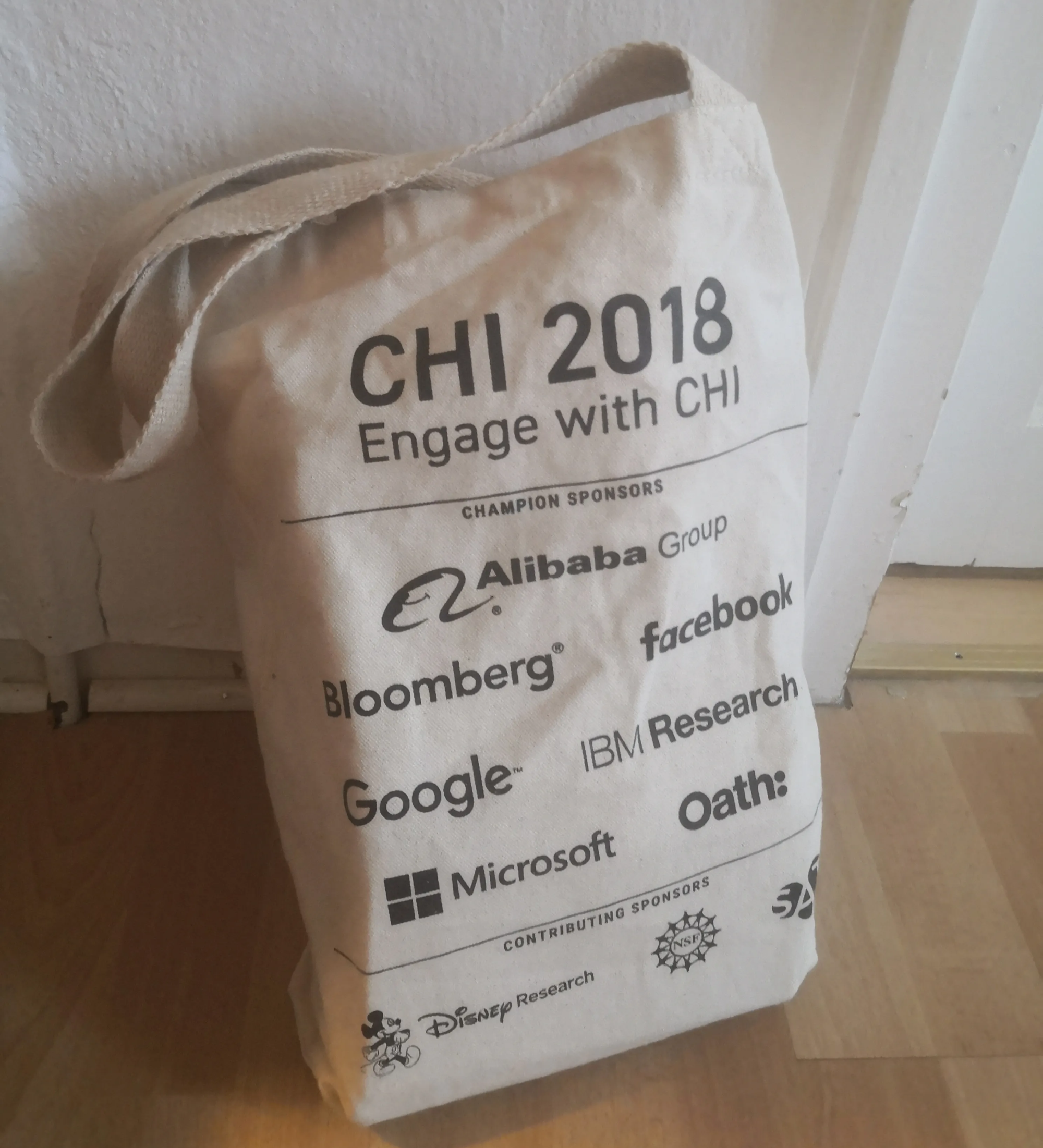
Another conference bag, carrying sponsors of scientific conference. Computing as a discipline and a field of design is inextricably entangled with capital - as well as war. As the conventional histories of computing recount, the first programmable digital computers, such as Z2, Colossus and ENIAC, were invented with military funding primarily to aid in war effort, and later re-purposed and adopted by industry and business. A simple conference bag thus invokes the military-industrial nexus as well as contemporary computing industry’s near-total dependence on and ownership by large corporations. As a literal and figurative carrier bag, this conference bag calls to attention the resulting complications of the story of computing, calling us to remain aware of how capital, be it military or corporate, influences which stories are told and by whom.
For me, a carrier bag is a work in process, never finished and never stable, but instead shaped by its patchwork and bags within bags within bags. The carrier bag of our theory for me represents multiple ways of carrying and rejects the containment of one singular thing. The carrier bag contains perspectives, such as those in books and diaries, it contains mundane stories capture on film with a camera. Additionally, the carrier bag allows for attaching new things and ideas to it as well, and it can expand to include new methods, theories and approaches. The different elements in and around the bag add texture to the stories and perspectives it carrier. Of course, this is just my carrier bag full of experiences and perspectives and patches, I gathered throughout my (non-)academic journey.

The more I – and we as scholars and researchers – make our way through the lands of computing, the more opportunities arise for exchange and tying knots and adding new things to our carrier bags to be able to better care for humans and non-humans to live well.
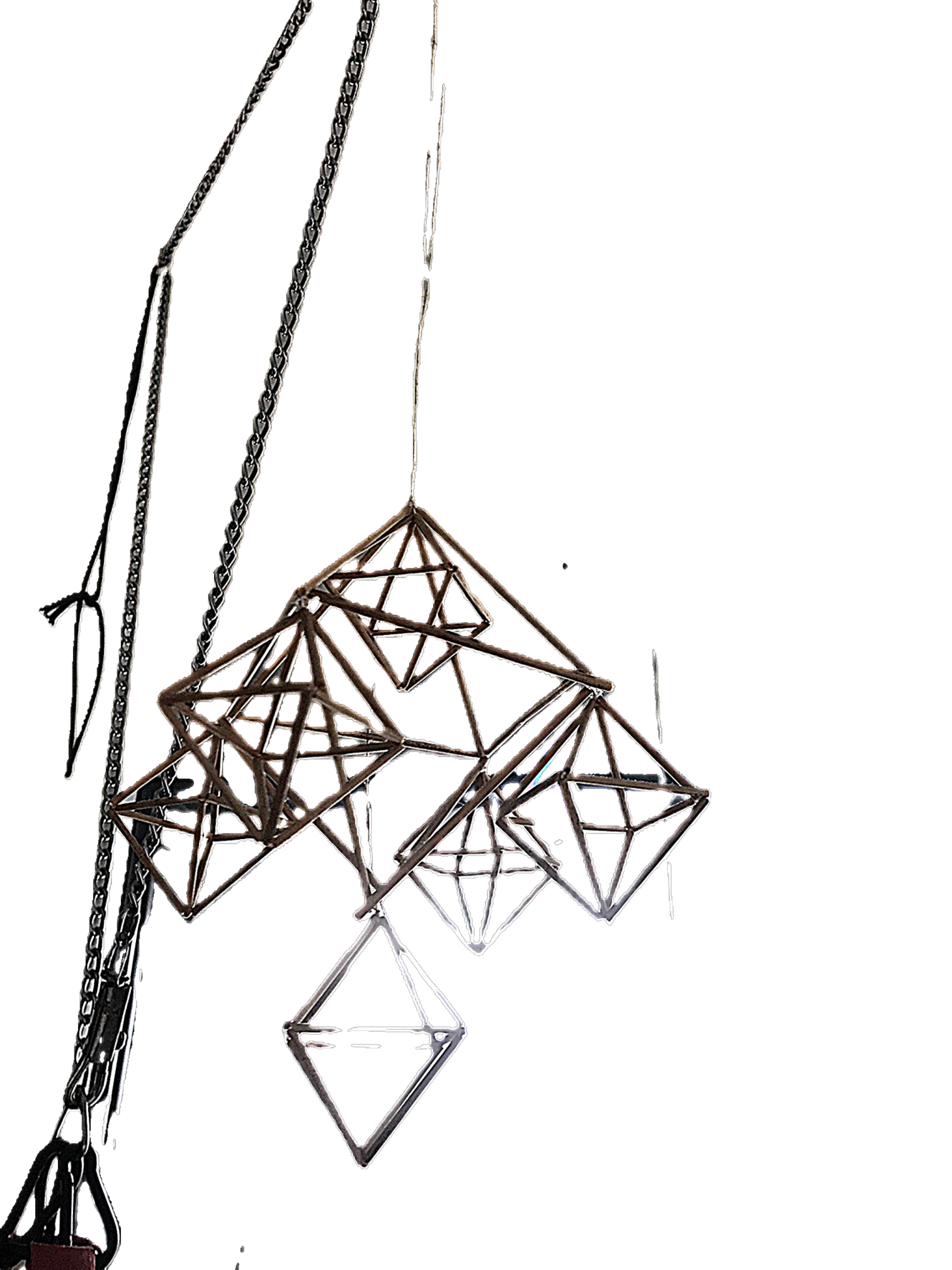
A Lithuanian "Sodas" (also present as "Himmeli" in the Finnish tradition) - a straw structure, woven together by hand during cold and long winter nights. It holds ancient mythologies of creation of the earth and sky, pre-Christian magic. It carries stories told at the hearth in peasant houses that since have been commodified as Christmas decorations. It invokes fractal algorithms, ethnobiomathematics [106], alongside a very personal sense of home. Such craft-based and other everyday forms of computing can become the foundation of “culturally situated design tools”, providing a socio-culturally grounded pedagogy and highlighting different forms of knowing in and about computing and design.
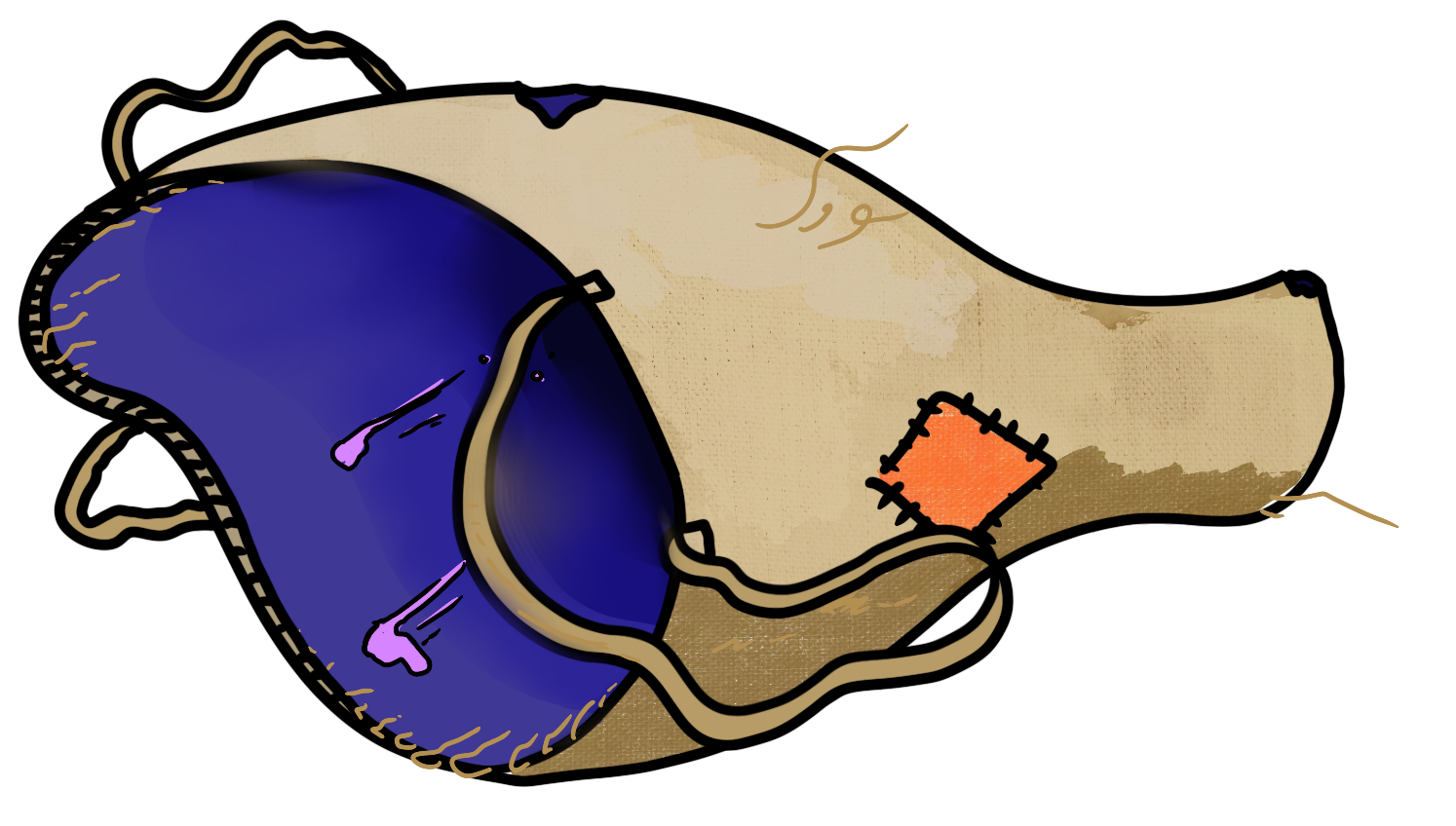
Thinking about the carrier bag of Informatics, I imagine a rather ragged cloth bag. It’s got holes in it, they are loosely connected still by pieces of fabric or string. Sometimes, stuff will fall out one of these holes and merely cling onto a thread until somebody notices. Sometimes, carrying the bag around the city that is academy, it will accidentally get stuck to a branch or a sharp corner, tearing new holes into the bag or dragging stuff with it. Its owners aren’t too careful with it either and such is it that there’s pieces of gum stuck in it, maybe some loose strings again, or patches that have been applied in a frantic try to preserve the bag’s structural integrity. Thus, often times when you put something in the bag and take it out at a later point, there’s something entirely else stuck to it. The bag, short of breathing, is hence a living creature, like a giant whale inhaling everything in its way, metabolising whatever it eats up or spitting it out, changed in form and functionality.
Mentioned on this Page: